

Easy and Important Interjections in English Grammar with Examples
Have you ever noticed how people suddenly express emotions during conversations? Words like Wow!, Oh!, Oops! instantly show feelings such as happiness, surprise, pain, or excitement. These special words are known as Interjections. In this section, we will understand what interjections are and how they are used in everyday communication.
What is an Interjections in English Grammar ?
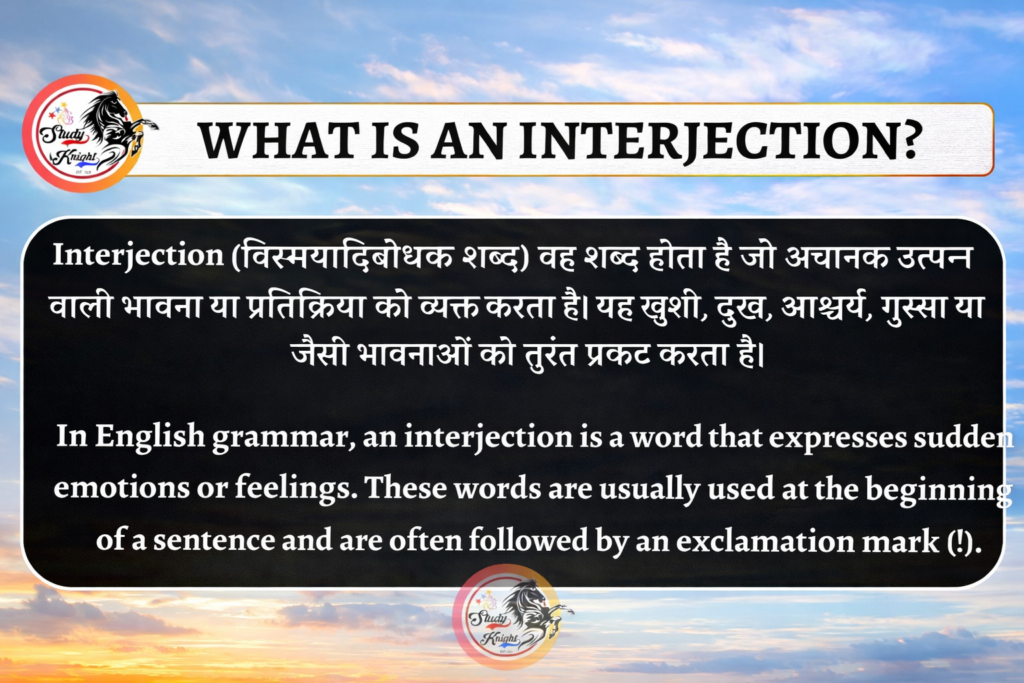
Interjection (विस्मयादिबोधक शब्द) वह शब्द होता है जो अचानक उत्पन्न होने वाली भावना या प्रतिक्रिया को व्यक्त करता है। यह खुशी, दुख, आश्चर्य, गुस्सा या डर जैसी भावनाओं को तुरंत प्रकट करता है।
In English grammar, an interjection is a word that expresses sudden emotions or feelings. These words are usually used at the beginning of a sentence and are often followed by an exclamation mark (!).
Examples
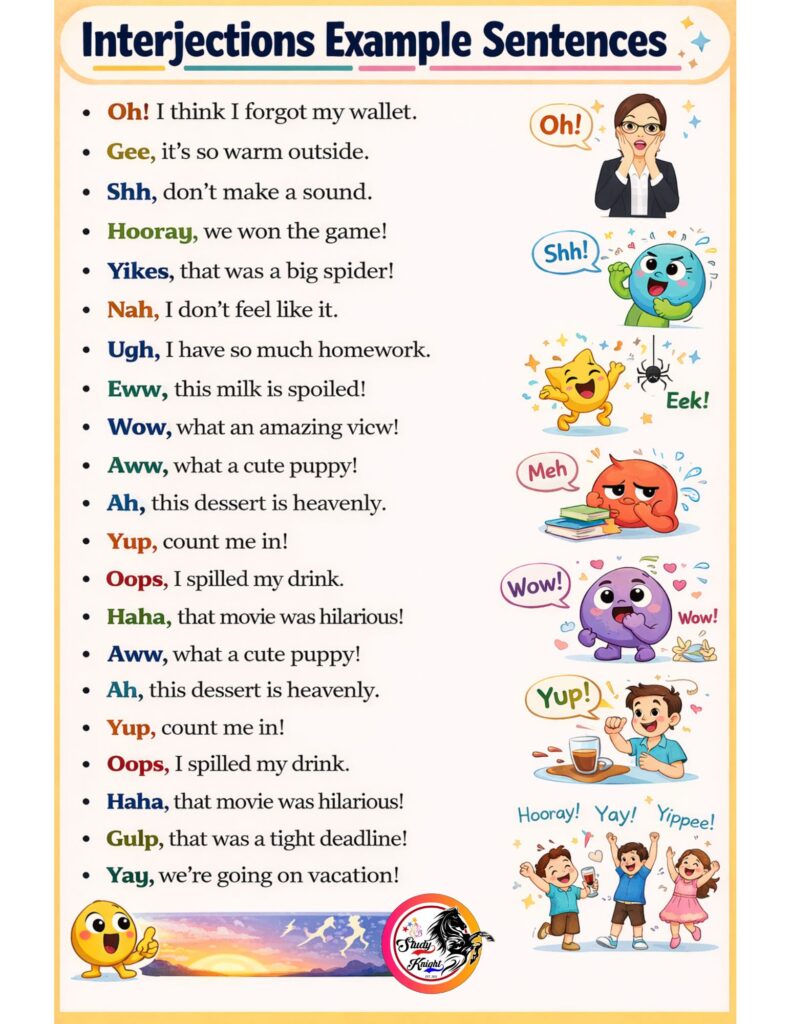
Wow! The view from this hill is amazing.
Oops! I dropped my pen on the floor.
ऊपर दिए गए वाक्यों में Wow और Oops Interjections हैं।
अब नीचे दिए गए वाक्यों को ध्यान से देखिए—
Wow! Our team played really well today.
Oh no! I forgot my notebook at home.
Oops! The glass slipped from my hand.
Bravo, Rohit! That was a wonderful shot.
Oh! I didn’t expect to see you here.
Hello, Aman! How have you been?
Ah! Now I finally understand the answer.
Wow! What a beautiful sunset.
Hey! What are you doing here?
Oh no! The bus has already left.
Ah! Have they finished the work?
Shh! Please stay quiet for a moment.
ऊपर दिए गए प्रत्येक वाक्य की शुरुआत ऐसे शब्द से हुई है जो किसी न किसी भावना को प्रकट करता है।
- Wow! – आश्चर्य या प्रशंसा व्यक्त करने के लिए
- Oh no! – दुख या निराशा प्रकट करने के लिए
- Oops! – गलती होने पर प्रतिक्रिया देने के लिए
इस प्रकार के शब्दों को ही Interjections (विस्मयादिबोधक शब्द) कहा जाता है।
Interjection – Definition and Important Rules
Definition of Interjection
परिभाषा:
विस्मयादिबोधक अव्यय (Interjection) वह शब्द होता है जिसका प्रयोग अचानक उत्पन्न होने वाली भावनाओं या मन के उद्गारों को व्यक्त करने के लिए किया जाता है। यह शब्द वाक्य के मुख्य भाग का आवश्यक अंग नहीं होता, बल्कि केवल भावना व्यक्त करने के लिए जोड़ा जाता है।
In English:
An Interjection is a word that is used to express sudden emotions or feelings such as joy, sorrow, surprise, anger, or excitement.
Interjection शब्द की उत्पत्ति Latin भाषा के दो शब्दों से मानी जाती है — Inter और Jactus।
- Inter का अर्थ है – बीच में
- Jactus का अर्थ है – डालना या फेंकना
अर्थात् Interjection ऐसा शब्द है जिसे वाक्य के बीच या शुरुआत में केवल भावना व्यक्त करने के लिए जोड़ दिया जाता है और यह वाक्य की मूल संरचना के लिए आवश्यक नहीं होता।
Important Rules for Using Interjections
Rule 1
कई बार एक ही Interjection अलग-अलग परिस्थितियों में भिन्न-भिन्न भावनाएँ व्यक्त कर सकता है।
Examples:
Oh! That was a terrible mistake.
यहाँ Oh! नाराज़गी या असंतोष प्रकट करता है।
Oh! What a wonderful painting.
यहाँ Oh! प्रशंसा और खुशी प्रकट करता है।
Oh! The child is about to fall.
यहाँ Oh! चिंता या डर को व्यक्त करता है।
Rule 2
Hurray! / Yay! जैसे शब्दों का प्रयोग खुशी या उत्साह (Joy) व्यक्त करने के लिए किया जाता है।
Examples:
Hurray! Our school team won the tournament.
Yay! I finally completed my project.
Hurray! Tomorrow is a holiday.
Yay! I scored the highest marks in the test.
Rule 3
Alas! का प्रयोग दुख या अफसोस (Sorrow) प्रकट करने के लिए किया जाता है।
Examples:
Alas! The old tree was cut down.
Alas! He missed the opportunity.
Alas! The match was cancelled due to rain.
Alas! We arrived too late to meet them.
Rule 4
Wow! / What! जैसे शब्द आश्चर्य (Surprise) व्यक्त करने के लिए प्रयोग किए जाते हैं।
Examples:
Wow! This place looks amazing.
What! You finished the work so quickly?
Wow! That magic trick was incredible.
What! You solved the puzzle already?
Rule 5
Bravo! / Well done! जैसे शब्द प्रशंसा या अनुमोदन (Approval) व्यक्त करने के लिए प्रयोग किए जाते हैं।
Examples:
Bravo! You gave a fantastic dance performance.
Well done! You answered all the questions correctly.
Bravo! The players showed great teamwork.
Well done! Your presentation was impressive.
Rule 6 – Use of Interjection Phrases
कुछ स्थितियों में केवल एक शब्द ही नहीं, बल्कि शब्दों के समूह (Interjection Phrases) भी तीव्र भावनाओं या अचानक उत्पन्न प्रतिक्रियाओं को व्यक्त करने के लिए प्रयोग किए जाते हैं। ये भाव आश्चर्य, प्रशंसा, पछतावा, शर्म, खुशी या चिंता आदि हो सकते हैं।
In English:
Certain groups of words are also used as interjections to express strong emotions or sudden reactions.
Examples:
Oh dear! I left my wallet at home today.
What a pity! We missed the last bus.
Excellent job! You solved the problem perfectly.
Good heavens! That building is extremely tall.
Oh dear! I forgot to send the important email.
What a shame! They lost the match in the final moment.
Excellent job! Your artwork looks amazing.
Good heavens! The weather changed so suddenly.
Oh dear! My phone battery is completely dead.
What a pity! The event was cancelled due to rain.
Excellent job! You handled the situation very wisely.
Good heavens! The view from the mountain is stunning.
Punctuation with Interjections
Interjection के बाद सामान्यतः विस्मयादिबोधक चिन्ह (!) — Exclamation Mark का प्रयोग किया जाता है। यह चिन्ह उस भावना की तीव्रता को दर्शाता है जो वक्ता व्यक्त करना चाहता है।
इसलिए Interjection का सही प्रयोग करने के लिए punctuation (विराम चिन्हों) का ज्ञान होना बहुत आवश्यक है, क्योंकि यही चिन्ह वाक्य के भाव को स्पष्ट और प्रभावशाली बनाता है।
Frequently Asked Questions (FAQs) – Interjections in English Grammar
1. What do you mean by an Interjection?
An Interjection is a part of speech used to express sudden emotions or feelings. It usually appears as a separate word or short phrase and is commonly followed by an exclamation mark to show strong emotion.
2. Give some examples of Interjections.
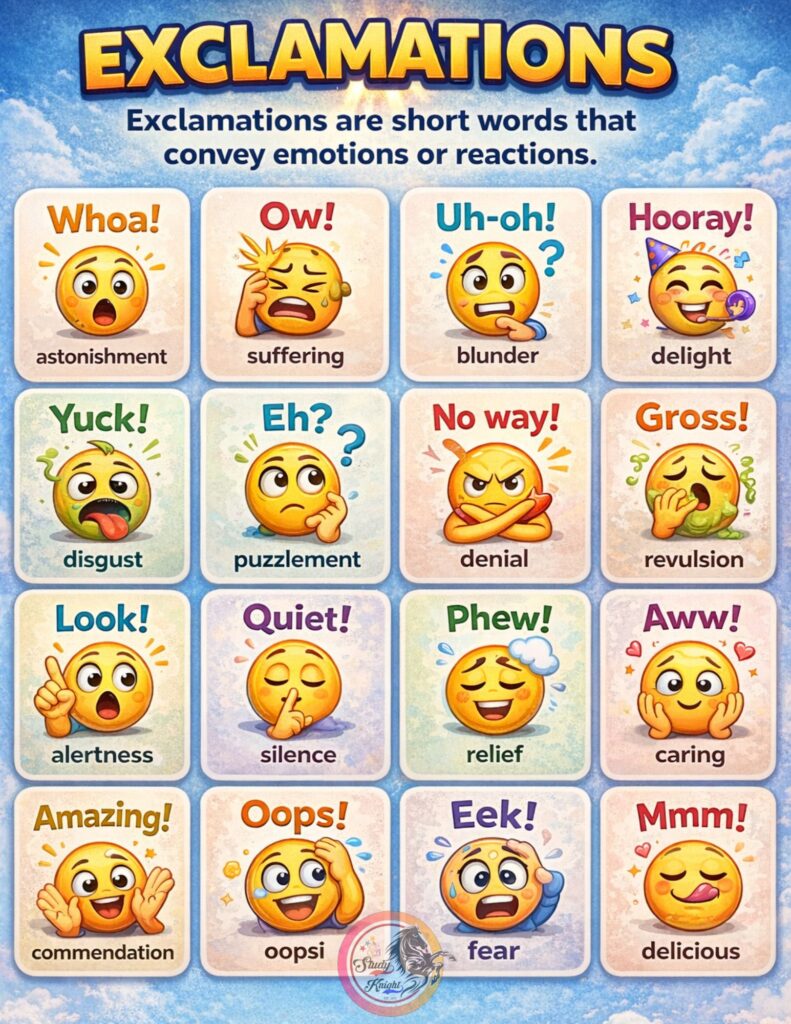
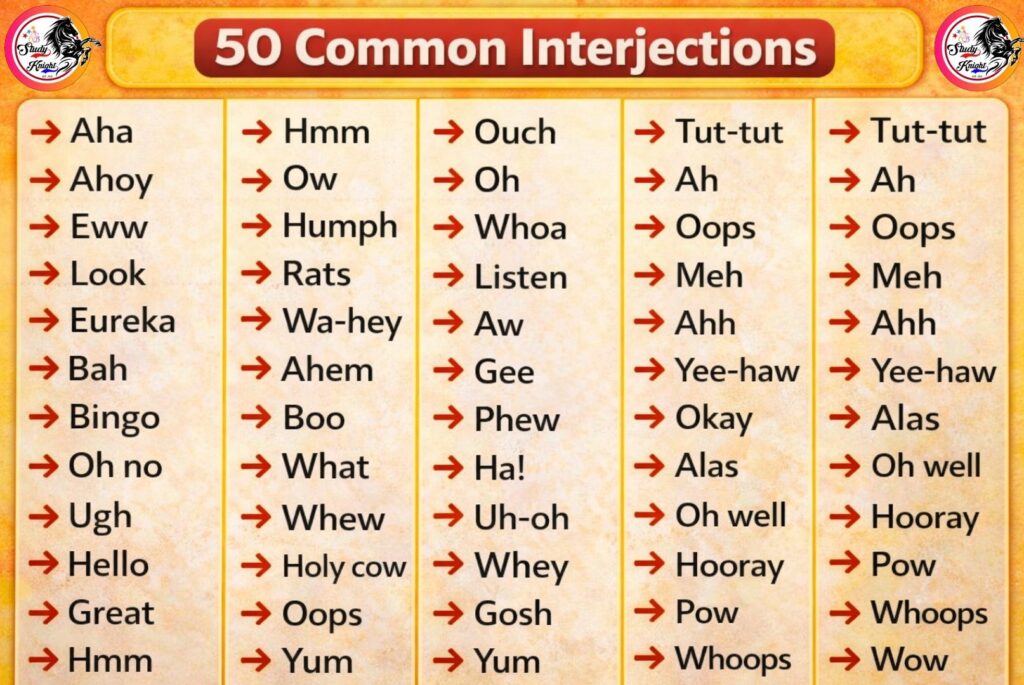
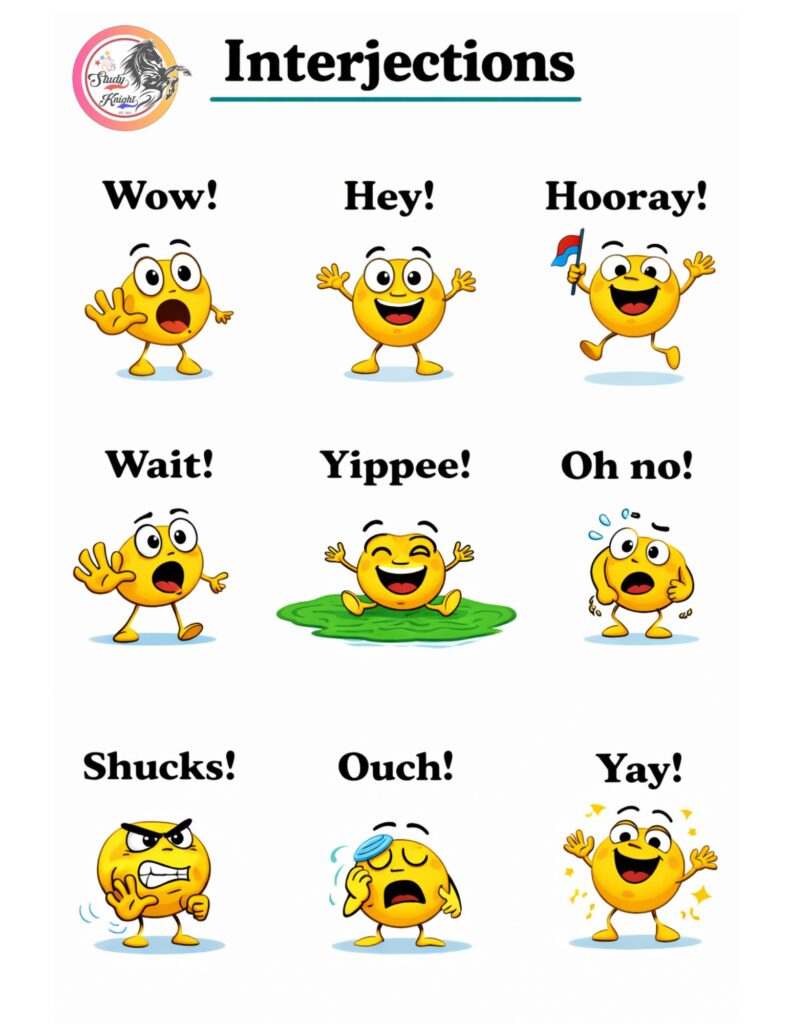
Common interjections include words such as “Wow!”, “Oh!”, “Oops!”, “Hurray!”, “Alas!”, “Great!”, “Hey!”, “Oops!”, and “Oh dear!” which are used to express different emotions instantly.
3. Why are Interjections used in language?
Interjections make communication more lively and expressive. They help speakers show immediate reactions like excitement, surprise, anger, happiness, appreciation, or disappointment, making conversations sound more natural and engaging.
4. Are Interjections suitable for formal writing?
Interjections are mostly used in informal speech and everyday conversations. However, they may sometimes appear in formal writing to create emphasis or emotional effect, but they should be used carefully and only when appropriate.
5. Do all languages have Interjections?
Yes, almost every language uses interjections, though their words and expressions may differ from culture to culture. Some interjections may sound similar across languages, while others are unique to a specific language.
Conclusion
In short, Interjections are expressive words or short phrases that communicate strong emotions or sudden reactions. They add energy and natural expression to language, helping us convey feelings like excitement, surprise, sadness, or relief — from “Wow!” to “Oh dear!”, these small words make communication more lively and meaningful.