

Types of Determiners Explained
What are Determiners?
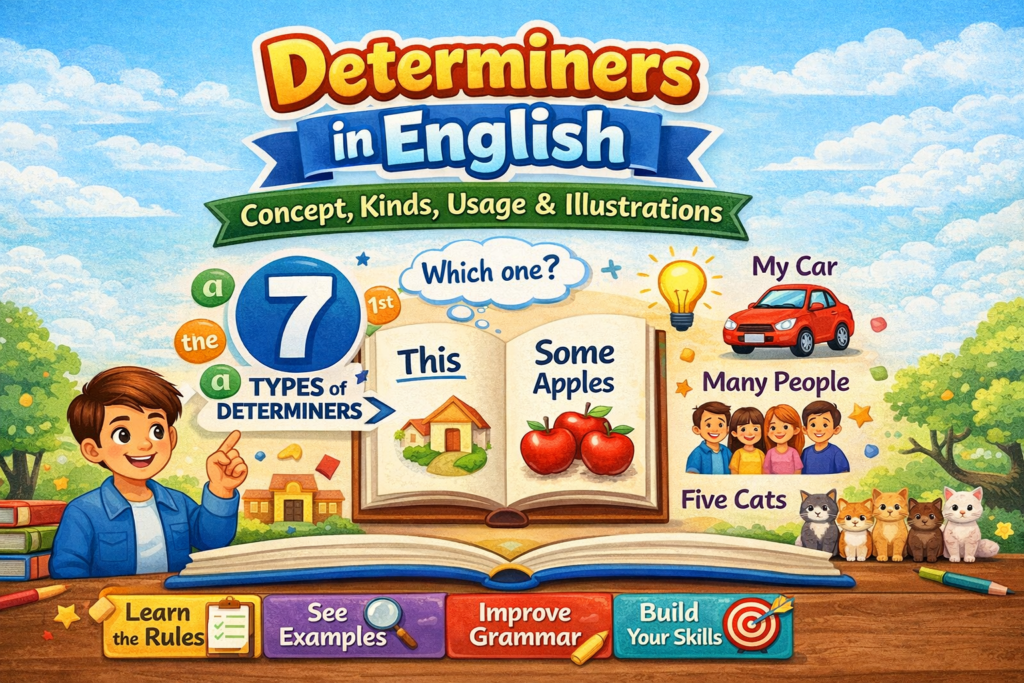
Determiners are words placed before nouns to give more clarity about them. They help us understand how many, whose, which one, or how much about a noun. In simple terms, they make the meaning of a noun more specific and clear.
Meaning and Definition of Determiners:
Determiner का मतलब होता है किसी noun की सीमा या पहचान तय करना। ये ऐसे शब्द होते हैं जो noun के बारे में अतिरिक्त जानकारी देते हैं, जैसे कि मात्रा, संख्या, स्वामित्व (ownership) या विशेषता।
English grammar में determiners में Articles (a, an, the) और कुछ विशेष प्रकार के adjectives शामिल होते हैं, जैसे—possessive, demonstrative, quantity और number वाले शब्द।
👉 आसान शब्दों में:
Determiners वे शब्द होते हैं जो noun के साथ लगकर उसके बारे में स्पष्ट जानकारी देते हैं।

Common Examples of Determiners:
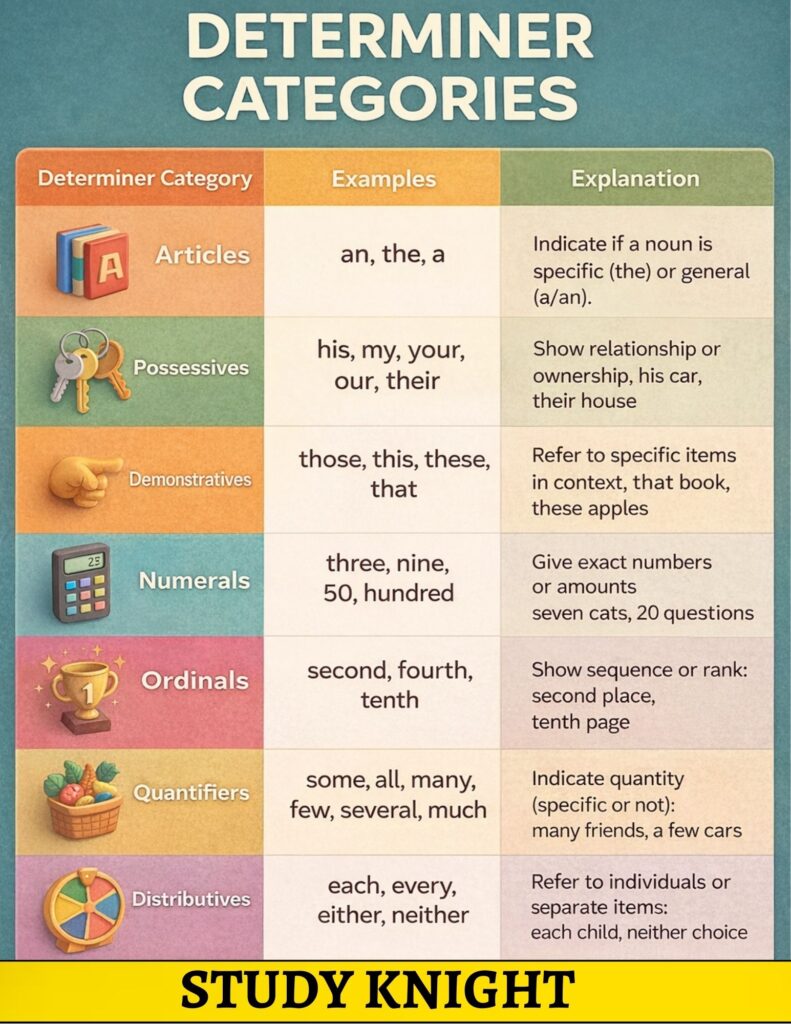
- Articles: a, an, the
- Quantity words: some, many, few, little, several
- Distributives: each, every, either, neither
- Possessives: my, your, his, her, our, their
- Demonstratives: this, that, these, those
- Numbers: one, three, first, second, etc.
Determiners in English – Types, Rules & Easy Explanation
Main Categories of Determiners
English grammar में determiners को कई भागों में बाँटा जाता है, जो noun के बारे में अलग-अलग तरह की जानकारी देते हैं:
- Articles (Definite & Indefinite)
- Possessive Words (Ownership दिखाने वाले)
- Number Words (गिनती बताने वाले)
- Quantity Words (मात्रा बताने वाले)
- Demonstratives (इशारा करने वाले शब्द)
- Question Words (प्रश्न पूछने वाले determiners)
Articles (A, An, The)
Articles ऐसे determiners हैं जो noun के बारे में यह बताते हैं कि वह general है या specific।
- A / An → Indefinite Articles (सामान्य)
- The → Definite Article (विशेष)
👉 आसान शब्दों में:
‘A’ और ‘An’ किसी अनजान या सामान्य चीज़ के लिए, जबकि ‘The’ किसी खास चीज़ के लिए प्रयोग होता है।
Examples:
- I saw a dog in the park. (कोई भी dog)
- I saw the dog you mentioned. (वही specific dog)
Types of Articles
Articles मुख्य रूप से दो प्रकार के होते हैं:
- Indefinite Article (A, An)
- Definite Article (The)
Indefinite Articles – “A” and “An”
Use of “A”
👉 Rule:
जब किसी word की sound consonant (व्यंजन ध्वनि) से शुरू होती है, तब “A” का प्रयोग होता है।
Examples:
- She has a bike.
- This is a table.
- He bought a phone.
- That is a mango tree.
👉 ध्यान देने योग्य बातें:
- Noun singular होना चाहिए
- Countable noun होना चाहिए
- Sound consonant होनी चाहिए (letter नहीं, sound important है)
Use of “An”
👉 Rule:
जब किसी word की sound vowel (स्वर ध्वनि) से शुरू होती है, तब “An” का प्रयोग किया जाता है।
Examples:
- He ate an apple.
- She saw an eagle.
- It is an old house.
- He is an honest man.
👉 ध्यान देने योग्य बातें:
- Sound vowel होनी चाहिए
- Singular countable noun होना चाहिए
Important Note:
- Vowels: A, E, I, O, U
- बाकी सभी letters consonants होते हैं
- हमेशा sound (उच्चारण) पर ध्यान दें, सिर्फ spelling पर नहीं
Rules of Articles (A, An, The) – Easy Explanation with Examples
Use of “A” with Vowel Letters (Special Case)
👉 Rule:
यदि किसी शब्द की शुरुआत Vowel (A, E, I, O, U) से हो लेकिन उसका उच्चारण व्यंजन ध्वनि (consonant sound) से शुरू होता है, तो उसके पहले “A” का प्रयोग किया जाता है।
Examples:
- He is a university student.
- She met a European traveler.
- He is a one-eyed soldier.
- This is a useful tool.
- I have a one-rupee coin.
👉 समझने वाली बात:
इन शब्दों की spelling भले ही vowel से शुरू हो, लेकिन उनकी sound “yu” या “wa” जैसी consonant sound देती है, इसलिए “A” लगाया जाता है।
Use of “An” with Consonant Letters (Special Case)
👉 Rule:
यदि किसी शब्द की शुरुआत consonant letter से हो लेकिन उसका उच्चारण vowel sound से हो, तो उसके पहले “An” का प्रयोग किया जाता है।
Examples:
- He will arrive in an hour.
- She is an honest person.
- He became an heir to the property.
👉 ध्यान दें:
यहाँ “H” silent होता है, इसलिए sound vowel की तरह आती है और “An” लगता है।
Definite Article – “The”
👉 Rule:
“The” का प्रयोग किसी specific (निश्चित) व्यक्ति, वस्तु या स्थान के लिए किया जाता है, जिसके बारे में पहले से जानकारी हो या जो context में clear हो।
Examples:
- This is a dog.
- This is a house.
- The dog is inside the house.
👉 Explanation:
- पहली बार mention करने पर “A” use होता है
- दूसरी बार उसी चीज़ को बताने पर “The” use होता है
Important Rule of “The”
👉 Rule:
किसी विशेष या पहले से ज्ञात noun के पहले “The” लगाया जाता है।
Use of “The” with Unique & Special Nouns
👉 Rule:
जो चीज़ें दुनिया में एक ही होती हैं (unique) या खास पहचान रखती हैं, उनके साथ “The” का प्रयोग होता है।
Examples:
- The sun rises in the east.
- The Taj Mahal is beautiful.
- The Ganga is a holy river.
- Mumbai is on the Arabian Sea.
Key Points to Remember:
- Unique चीज़ों (sun, moon, earth) के साथ “The”
- Rivers, seas, mountain ranges के साथ “The”
- सामान्य Proper Noun के साथ “The” नहीं लगता
- लेकिन कुछ special cases में लग सकता है (जैसे: The Himalayas)
Example:
- The Himalayas are in the north of India.
Special Rules of “The” – Easy Guide with Examples
👉 ध्यान देने वाली बात:
Ganga और Himalayas भले ही Proper Nouns हैं, लेकिन इनके पहले “The” इसलिए लगाया जाता है क्योंकि ये क्रमशः नदी और पर्वत श्रेणी को दर्शाते हैं।
Important Uses of “The”
Rule 1: Proper Nouns के साथ
👉 सामान्यतः Proper Noun के पहले “The” नहीं लगाया जाता।
Example:
- Delhi is a big city.
- Ramesh is my friend.
Rule 2: Natural Features, Books & Organizations
👉 नदियों, समुद्रों, पर्वत श्रेणियों, धार्मिक ग्रंथों, समाचार-पत्रों और राजनीतिक दलों के नाम से पहले “The” का प्रयोग होता है।
Examples:
- The Yamuna flows through North India.
- The Arabian Sea is विशाल है।
- The Indian Express is popular.
- The Quran is a holy book.
- The Mahabharata is an ancient epic.
- The Congress is a political party.
Rule 3: Superlative Degree के साथ
👉 जब किसी adjective का superlative form हो, तब उसके पहले “The” लगता है।
Examples:
- She is the smartest student here.
- This is the tallest building in the city.
- He is the strongest player in the team.
Rule 4: Adjective as a Noun
👉 जब adjective का प्रयोग पूरे वर्ग (class) के लिए किया जाता है, तब उसके पहले “The” लगाया जाता है।
Examples:
- The rich often ignore the poor.
- The young should respect elders.
👉 Note:
ऐसे sentences में verb हमेशा plural होती है।
Rule 5: Relative Clause के साथ
👉 जब noun के साथ relative clause (who, which, that) जुड़ता है, तो वह noun specific हो जाता है, इसलिए उसके पहले “The” आता है।
Examples:
- I read the book that you recommended.
- She likes the girl who sings well.
- We visited the place where he was born.
Omission of Articles (जहाँ Article नहीं लगता)
(1) General Meaning में Common Noun
👉 जब noun का प्रयोग सामान्य रूप में हो, तब article नहीं लगता।
Examples:
- Life is full of challenges.
- Man is a social animal.
(2) Proper Noun & Material Noun
👉 Proper Noun और material (पदार्थ) वाले nouns के साथ article नहीं आता।
Examples:
- Gold is precious.
- India is a diverse country.
- Sugar is sweet.
(3) Abstract Noun (General Sense)
👉 जब abstract noun का प्रयोग सामान्य अर्थ में हो, तब article नहीं लगता।
Examples:
- Honesty is the best policy.
- Knowledge is power.
- Happiness cannot be bought.
Rule of Article Repetition – Clear Explanation with Examples
Repetition of Articles (Article को दोहराने का नियम)
👉 Rule:
जब sentence में Article (A/An/The) को दो बार इस्तेमाल किया जाता है, तो इसका मतलब होता है कि दो अलग-अलग व्यक्ति या वस्तुएँ हैं।
लेकिन अगर Article सिर्फ एक बार आता है, तो वह एक ही व्यक्ति या वस्तु को दर्शाता है।
Examples to Understand the Difference:
- You have a red and a blue pen. → (दो अलग pens)
- You have a red and blue pen. → (एक ही pen, जिसमें दो colors हैं)
👉 समझने वाली बात:
- Article दो बार → अलग-अलग चीजें
- Article एक बार → एक ही चीज
More Examples:
- The teacher and the principal are present.
👉 (दो अलग व्यक्ति) - The teacher and principal is present.
👉 (एक ही व्यक्ति, जिसके दो roles हैं)
Key Point:
👉 यदि अलग-अलग identity दिखानी हो → Article repeat करें
👉 यदि एक ही व्यक्ति/वस्तु के multiple roles हों → Article repeat न करें
Possessive Determiners – Meaning, Use & Examples
What are Possessives?
Possessive determiners वे शब्द होते हैं जो किसी चीज़ या व्यक्ति पर किसका अधिकार (ownership) है, यह बताते हैं। ये हमेशा noun के पहले लगते हैं और उसे clear बनाते हैं।
👉 Common Possessives:
my, your, his, her, its, our, their
Examples in Sentences:
- Please take my bag.
- Their garden looks beautiful.
More Practice Examples:
- My dog is very friendly. (मेरे कुत्ते की बात हो रही है)
- Your mobile is on the table. (तुम्हारा मोबाइल)
- Our college is well-known. (हमारा कॉलेज)
- Their cars are expensive. (उनकी गाड़ियाँ)
- His brother is a doctor. (उसका भाई)
- Her friend is very helpful. (उसकी दोस्त)

Key Understanding:
ऊपर दिए गए वाक्यों में my, your, our, their, his, her सीधे noun से जुड़े हुए हैं और यह बता रहे हैं कि वह चीज़ किसकी है।
👉 इसलिए इन्हें Possessive Determiners / Possessive Adjectives कहा जाता है।
Number & Quantity Determiners – Simple Explanation with Examples
Adjectives of Number (Numeral Determiners)
👉 Meaning:
ये determiners किसी noun की exact संख्या या क्रम (order) को बताते हैं। यानी कितने या कौन-से नंबर पर—यह जानकारी देते हैं।
Examples:
- I have two books.
- She bought five dresses.
- There are ten students in the room.
- He secured first position.
- This is my second attempt.
More Examples:
- Seven players
- Three houses
- Fifty रुपये
- Fourth chapter
- One hundred marks
👉 ऊपर दिए गए words जैसे two, five, ten, first, second, hundred noun की संख्या या क्रम को दिखा रहे हैं, इसलिए ये Adjectives of Number हैं।
Types of Number Determiners:
- Cardinal Numbers (गिनती वाले)
👉 one, two, three, four, etc. - Ordinal Numbers (क्रम वाले)
👉 first, second, third, fourth, etc.
Quantifiers (Adjectives of Quantity)
👉 Meaning:
ये determiners किसी noun की मात्रा (quantity) बताते हैं, खासकर जब exact number नहीं बताया जाता।
Examples:
- I have some water.
- Many people joined the meeting.
- She has a little knowledge.
More Practice Examples:
- We bought some fruits yesterday.
- He had much time to prepare.
- She spent all her money.
- They don’t have any sugar left.
Key Understanding:
👉 Number Determiners → exact संख्या बताते हैं (one, two, first)
👉 Quantifiers → अनुमानित मात्रा बताते हैं (some, much, many)
Demonstrative Determiners – Meaning, Use & Examples
What are Demonstratives?
Demonstrative determiners वे शब्द होते हैं जो किसी व्यक्ति या वस्तु की ओर इशारा (point out) करते हैं। ये बताते हैं कि चीज़ पास है या दूर और singular है या plural।
👉 Common Demonstratives:
this, that, these, those
Easy Understanding:
- This / These → पास की चीज़ों के लिए
- That / Those → दूर की चीज़ों के लिए
Examples in Sentences:
- This book is very useful.
- That girl is my friend.
- These apples are fresh.
- Those buildings are very tall.
More Practice Examples:
- This pen writes smoothly.
- That car is expensive.
- These students are मेहनती हैं।
- Those stars look beautiful tonight.
Key Point:
👉 इस प्रकार this, that, these, those noun के साथ मिलकर उसकी ओर संकेत करते हैं, इसलिए इन्हें Demonstrative Determiners (या Demonstrative Adjectives) कहा जाता है।
Interrogative Determiners – Meaning, Use & Examples
What are Interrogatives?
Interrogative determiners ऐसे शब्द होते हैं जिनका उपयोग प्रश्न पूछने के लिए किया जाता है। ये noun के साथ लगकर यह जानने में मदद करते हैं कि कौन-सा, क्या या किसका।
👉 Common Interrogatives:
which, what, whose
Examples in Questions:
- Which subject do you like most?
- What time does the class start?
- Whose bag is lying here?
More Practice Examples:
- Which movie are you watching?
- What book are you reading?
- Whose phone is ringing?
- Which road leads to the station?
- What answer did you write?

Key Understanding:
👉 इन वाक्यों में which, what, whose noun के साथ जुड़े हुए हैं और प्रश्न पूछ रहे हैं, इसलिए ये Interrogative Determiners (Interrogative Adjectives) कहलाते हैं।
Important Questions on Determiners – Quick Revision Guide
Q1. What is the difference between “A” and “An”?
👉 Answer:
“A” और “An” दोनों Indefinite Articles हैं, लेकिन इनका प्रयोग sound के आधार पर होता है।
- A → consonant sound से पहले
- An → vowel sound से पहले
Examples:
- a bike, a teacher
- an orange, an umbrella
Q2. Can “The” be used with plural nouns?
👉 Answer:
हाँ, “The” singular और plural दोनों nouns के साथ इस्तेमाल किया जा सकता है, जब कोई चीज़ specific या known हो।
Examples:
- the students (plural)
- the student (singular)
Q3. Is it necessary to use determiners before every noun?
👉 Answer:
नहीं, हर बार determiner लगाना जरूरी नहीं होता। कुछ cases में noun बिना determiner के भी इस्तेमाल हो सकता है, खासकर जब बात general sense में हो।
Examples:
- Life is beautiful.
- Water is essential.
Q4. Give examples of Possessive Determiners.
👉 Answer:
Possessive determiners ownership दिखाते हैं।
Examples:
- my, your, his, her, its, our, their
👉 Usage:
- my phone
- their house
- our country
Q5. Name some common Quantifiers.
👉 Answer:
Quantifiers quantity या amount को express करते हैं।
Examples:
- some, any, many, much, few, several, all, most, each, every
👉 Usage:
- some water
- many students
- every person