

Tense – Meaning, Types & Easy Explanation 📘
What is Tense in English Grammar?
यह grammar का एक important concept है जो यह बताता है कि कोई action या state किस समय हो रही है ⏳। यह verb के form के जरिए time को clearly show करता है।
👉 सरल शब्दों में:
हमें यह समझने में मदद करता है कि कोई काम कब हुआ, हो रहा है या होगा।
Meaning of Tense (काल का अर्थ)
व्याकरण में Tense (काल) उस रूप को कहते हैं जो यह दर्शाता है कि कोई कार्य, घटना या स्थिति किस समय घटित होती है।
यह वाक्य के अलग-अलग हिस्सों के बीच time relation (समय का संबंध) को भी स्पष्ट करता है।
Use of Tense
इसका प्रयोग हम किसी भी action या स्थिति को तीन मुख्य समयों में व्यक्त करने के लिए करते हैं:
- Past (भूतकाल) → जो काम पहले हो चुका है
- Present (वर्तमान काल) → जो अभी हो रहा है
- Future (भविष्य काल) → जो आगे होने वाला है
Standard Definition of Tense
👉 ये वह grammatical system है जो verb के माध्यम से यह बताता है कि कोई कार्य past, present या future में हुआ है, और वह complete है या अभी जारी है।
📌 Quick Recap:
- Tense = समय बताने वाला concept
- Verb form से identify होता है
- 3 main types: Past, Present, Future
Types of Tense in English – Simple Guide with Examples 📘
Main Types of Tense ⏳
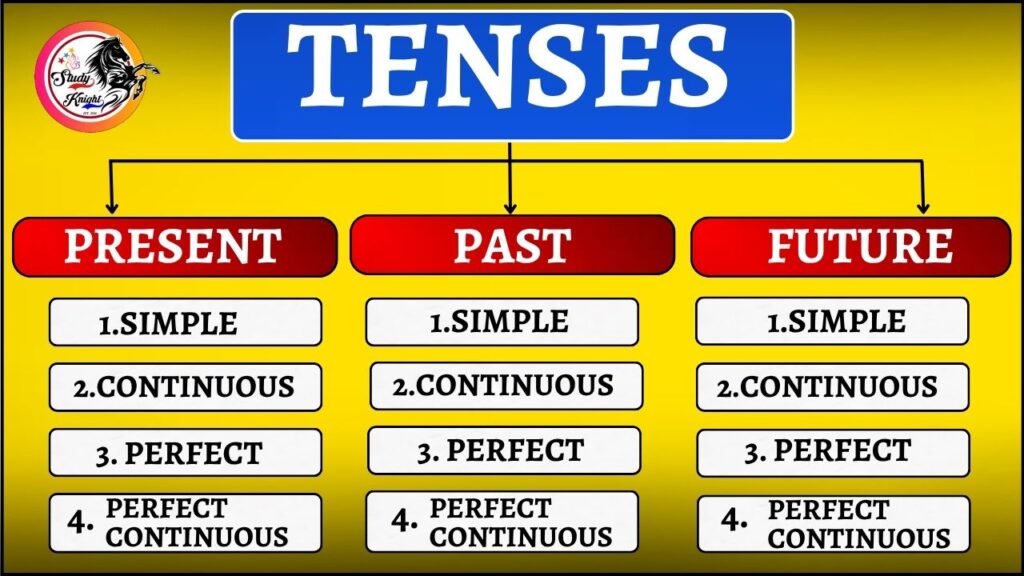
English grammar में यह मुख्य रूप से तीन प्रकार के होते हैं, जो समय को दर्शाते हैं:
- Present Tense (वर्तमान काल)
- Past Tense (भूतकाल)
- Future Tense (भविष्य काल)
👉 हर tense के अंदर अलग-अलग forms होते हैं, जैसे:
Simple, Continuous, Perfect, Perfect Continuous
Present Tense (वर्तमान काल)
👉 Definition:
इसका उपयोग उन actions या situations के लिए किया जाता है जो अभी हो रही हैं या हमेशा सत्य रहती हैं।
👉 आसान भाषा में:
जो काम रोज़ होता है या अभी हो रहा है, उसे present tense में लिखा जाता है।
Examples:
- I go for a walk daily.
- She drinks coffee every morning.
- They play cricket on weekends.
Types of Present Tense 📌
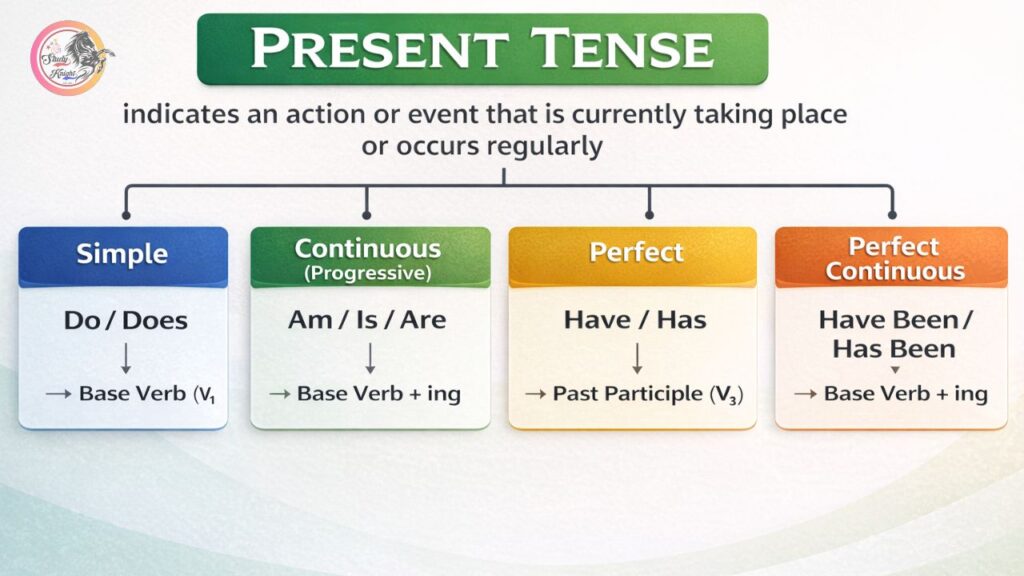
Present tense के 4 मुख्य प्रकार होते हैं:
- Simple Present
- Present Continuous
- Present Perfect
- Present Perfect Continuous
1. Simple Present Tense (Present Indefinite)
👉 Use:
यह उन कामों के लिए इस्तेमाल होता है जो habit, routine या universal truth को दिखाते हैं।
Examples:
- He writes stories.
- We read books in the evening.
- The earth revolves around the sun.
Sentence Structure 🧩
👉 Affirmative:
Subject + Verb (s/es) + Object
👉 Negative:
Subject + do/does + not + base verb
👉 Interrogative:
Do/Does + Subject + base verb + ?
📌 Quick Tip:
- He/She/It के साथ verb में s/es लगता है !
- बाकी subjects के साथ base verb आता है !
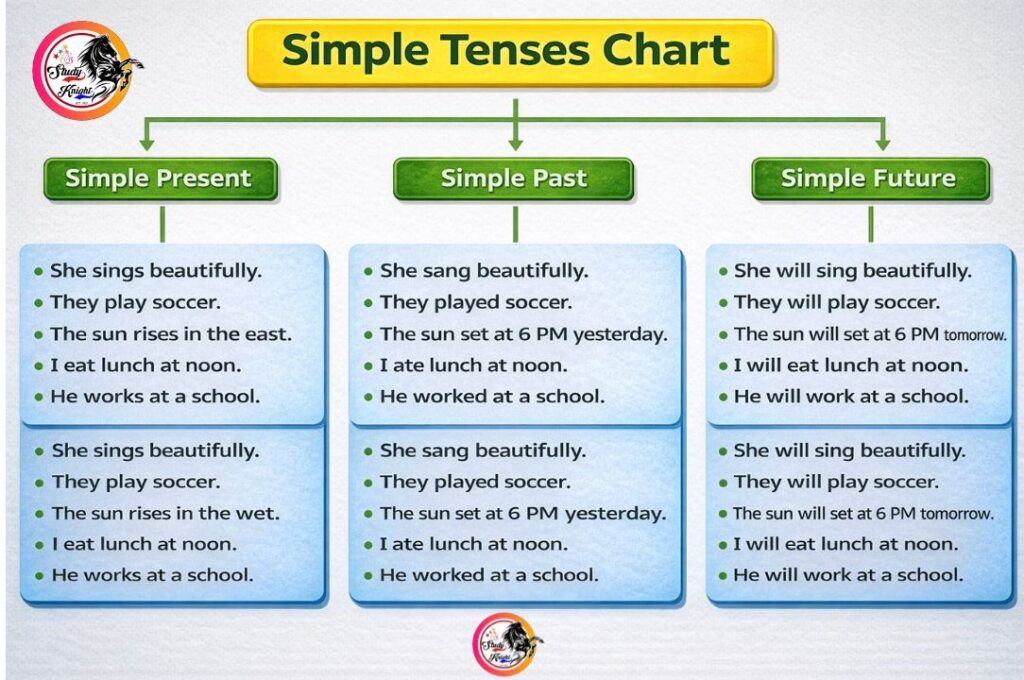
Simple Present Tense – Sentence Patterns & Examples 📘
Sentence Forms in Simple Present Tense
| Affirmative ✅ | Negative ❌ | Interrogative ❓ |
| I drink tea every day. | I do not drink coffee. | Do you drink tea? |
| She writes poems. | She does not drive a car. | Does she write poems? |
| We play football in the evening. | We do not watch TV daily. | Do we play football? |
| They learn new skills. | They do not waste time. | Do they learn quickly? |
| He teaches math. | He does not like noise. | Does he teach well? |
| The dog runs fast. | The cat does not like water. | Does the dog run fast? |
| We visit our relatives often. | We do not travel much. | Do we visit them often? |
| The sun sets in the west. | The stars do not shine during the day. | Does it get cold here? |
Important Rule 📝
👉 Present Indefinite (Simple Present) में:
- He / She / It (Third Person Singular) के साथ
👉 Negative और Question में “does” का प्रयोग होता है - बाकी subjects (I, We, You, They) के साथ
👉 “do” का प्रयोग किया जाता है
Quick Tip 💡
- Affirmative में → verb में s/es (he, she, it के साथ)
- Negative/Question में → base verb (V1) ही आता है
2. Present Continuous Tense – Usage, Rules & Examples ⏳
What is Present Continuous Tense?
इसका उपयोग उन actions के लिए किया जाता है जो अभी इस समय हो रहे हैं या current time के आसपास चल रहे हैं।
👉 आसान भाषा में:
जो काम अभी चल रहा है, उसे हम Present Continuous में लिखते हैं।
Structure (बनाने का तरीका) 🧩
इस tense में helping verb am / is / are + main verb की -ing form का उपयोग होता है।
Examples:
- I am learning English.
- She is cooking food.
- They are watching a match.
Sentence Rules 📌
👉 Affirmative:
Subject + am/is/are + Verb + ing
👉 Negative:
Subject + am/is/are + not + Verb + ing
👉 Interrogative:
Am/Is/Are + Subject + Verb + ing + ?
More Practice Examples:
- He is playing guitar. 🎸
- We are preparing for exams.
- She is talking on the phone. 📱
- They are building a house.
- I am reading a novel. 📖
Quick Tips 💡
- I → am
- He/She/It → is
- We/You/They → are
- हमेशा verb की -ing form लगती है
Present Continuous Tense – Sentence Patterns & Examples ⏳
Sentence Structure in Present Continuous
| Affirmative ✅ | Negative ❌ | Interrogative ❓ |
| I am studying now. | I am not using my phone. | Are you enjoying the class? |
| She is singing a song. | She is not attending the meeting. | Is she singing today? |
| We are preparing dinner. | We are not going outside tonight. | Are we meeting them later? |
| They are playing in the ground. | They are not completing the work. | Are they coming with us? |
| He is fixing the bike. | He is not watching TV. | Is he fixing it properly? |
Important Rules 📝
👉 Present Continuous tense में:
- am / is / are + verb + ing का use होता है
- यह tense current action (अभी हो रहा काम) को दिखाता है
Negative Sentence Rule ❌
👉 Structure:
Subject + am/is/are + not + verb + ing
✔ Example:
- She is not reading.
- They are not playing.
Interrogative Sentence Rule ❓
👉 Structure:
Am/Is/Are + Subject + verb + ing + ?
✔ Example:
- Are you learning English?
- Is he coming today?
Quick Note 💡
- “Not” हमेशा helping verb (am/is/are) के बाद आता है
- Question में helping verb सबसे पहले आता है
- Main verb हमेशा -ing form में रहती है
3. Present Perfect – Use, Rules & Examples ⏳
What is Present Perfect Tense?
इसका उपयोग उन actions के लिए किया जाता है जो past में हो चुके हैं लेकिन उनका असर अभी भी present में है।
👉 आसान शब्दों में:
काम पहले पूरा हो गया है, लेकिन उसका connection अभी के समय से है।
Structure (बनाने का तरीका) 🧩
इस tense में helping verb has / have + Verb3 (past participle) का use होता है।
Examples:
- She has completed her project.
- We have watched this movie.
- They have visited Jaipur recently.
Sentence Rules 📌
👉 Affirmative:
Subject + has/have + Verb3
👉 Negative:
Subject + has/have + not + Verb3
👉 Interrogative:
Has/Have + Subject + Verb3 + ?
More Practice Examples:
- He has written a letter. ✉️
- I have learned new skills.
- They have finished the work.
- She has cooked dinner.
- We have traveled a lot.
Quick Tips 💡
- He/She/It → has
- I/We/You/They → have
- हमेशा verb की 3rd form (V3) use होती है
Present Perfect Tense – Sentence Patterns & Examples ⏳
Sentence Structure in Present Perfect
| Affirmative ✅ | Negative ❌ | Interrogative ❓ |
| I have finished my work. | I have not called him yet. | Have you completed the task? |
| They have visited many places. | They have not submitted the form. | Have they checked the results? |
| She has written a story. | She has not attended the class. | Has she finished the book? |
| We have stayed here for years. | We have not received any message. | Have we talked before? |
| He has achieved his goal. | He has not practiced recently. | Has he solved the problem? |
Important Rules 📝
👉 Present Perfect tense में:
- has / have + Verb3 (third form) का use होता है
- यह tense past action को दिखाता है जिसका effect अभी भी present में होता है
Negative Sentence Rule ❌
👉 Structure:
Subject + has/have + not + Verb3
✔ Example:
- She has not completed the work.
- They have not arrived yet.
Interrogative Sentence Rule ❓
👉 Structure:
Has/Have + Subject + Verb3 + ?
✔ Example:
- Have you seen this place?
- Has he finished his task?
Quick Note 💡
- I/We/You/They → have
- He/She/It → has
- Main verb हमेशा third form (V3) में होती है
4. Present Perfect Continuous Tense – Use, Rules & Examples ⏳
What is Present Perfect Continuous Tense?
Present Perfect Continuous tense उन actions को बताने के लिए use होता है जो past में शुरू हुए, अभी तक चल रहे हैं और आगे भी जारी रह सकते हैं।
👉 आसान भाषा में:
जो काम पहले से शुरू होकर अभी तक लगातार चल रहा है, उसे इस tense में लिखा जाता है।
Structure (बनाने का तरीका) 🧩
इस tense में helping verb:
👉 has / have + been + verb + ing
Examples:
- He has been studying for two hours.
- We have been working since morning.
- They have been practicing क्रिकेट all day.
Sentence Rules 📌
👉 Affirmative:
Subject + has/have + been + Verb + ing + for/since + time
👉 Negative:
Subject + has/have + not + been + Verb + ing + for/since + time
👉 Interrogative:
Has/Have + Subject + been + Verb + ing + for/since + time + ?
More Practice Examples:
- She has been reading a novel for an hour. 📖
- I have been learning English since 2024.
- They have been building a house for months.
- He has been playing football since morning.
- We have been preparing for exams for weeks.
Key Points 💡
- Since → exact time (since morning, since 2020)
- For → duration (for 2 hours, for many days)
- हमेशा verb की -ing form use होती है
Quick Tip 📌
- He/She/It → has been
- I/We/You/They → have been
- Present Perfect Continuous – Sentence Patterns & Examples ⏳
- Sentence Structure in Present Perfect Continuous
| Affirmative ✅ | Negative ❌ | Interrogative ❓ |
| I have been preparing for exams since morning. | I have not been using social media today. | Have you been studying for long? |
| They have been practicing football since afternoon. | They have not been attending classes regularly. | Have they been practicing daily? |
| She has been working on her assignment for days. | She has not been feeling well lately. | Has she been working continuously? |
| We have been learning new topics for months. | We have not been revising properly. | Have we been focusing on this chapter too much? |
Important Rules 📝
👉 इस tense में:
- has/have + been + verb + ing का प्रयोग होता है
- यह tense continuous action (लगातार चल रहे काम) को दिखाता है, जो past से शुरू होकर अभी तक जारी है
Negative Sentence Rule ❌
👉 Structure:
Subject + has/have + not + been + verb + ing
✔ Example:
- He has not been studying.
- They have not been working hard.
Interrogative Sentence Rule ❓
👉 Structure:
Has/Have + Subject + been + verb + ing + ?
✔ Example:
- Have you been waiting long?
- Has she been practicing daily?
Quick Note 💡
- Since → exact starting point (since morning, since 2022)
- For → duration (for 2 hours, for many days)
- हमेशा verb की -ing form use होती है
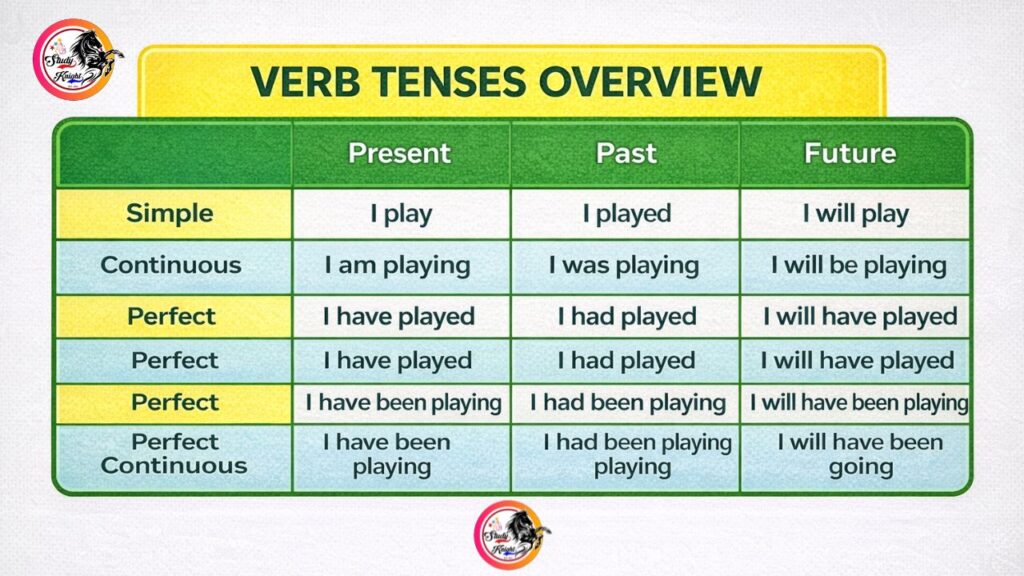
Important Note – Present Perfect Continuous Tense 📌
👉 Present Perfect Continuous tense में helping verb “have/has” का use auxiliary के रूप में किया जाता है, जिसके बाद “been” और फिर main verb की -ing form लगती है।
👉 Structure समझिए:
Subject + have/has + been + verb + ing
Key Points 💡
- I, You, We, They → have been
- He, She, It → has been
- Main verb हमेशा -ing form में होती है
- यह tense ऐसे action को दिखाता है जो past से शुरू होकर अभी तक जारी है ⏳
Quick Examples:
- I have been reading for two hours.
- She has been working since morning.
Past Tense in English – Meaning, Types & Examples ⏳
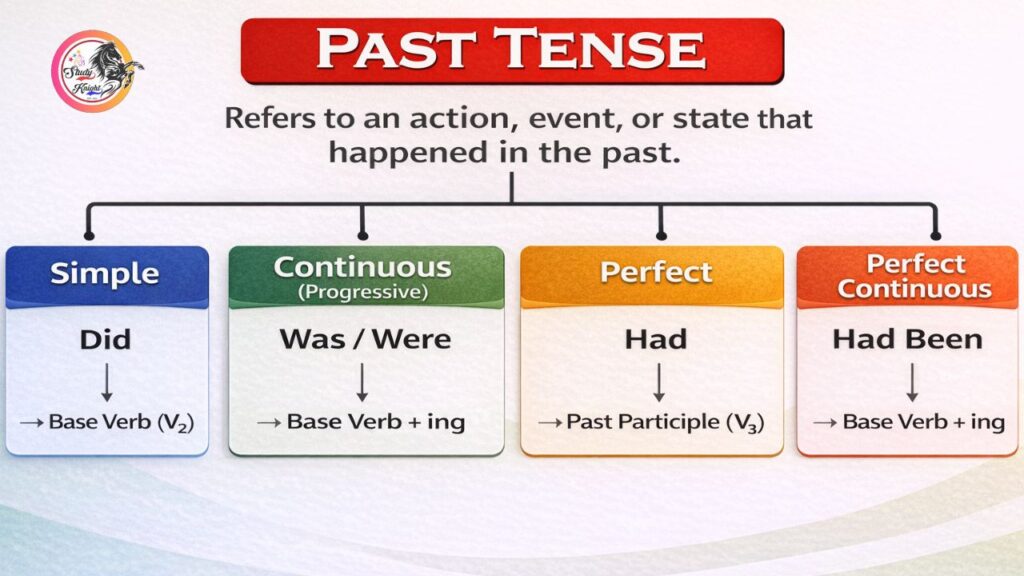
What is Past Tense?
Past tense का उपयोग उन actions या situations के लिए किया जाता है जो पहले ही हो चुके हैं।
👉 आसान भाषा में:
जो काम बीत चुके समय में पूरा हो गया, उसे past tense में लिखा जाता है।
Examples:
- I visited the market yesterday.
- She completed her work.
- They watched a match last night.
Types of Past Tense 📌
Past tense के 4 मुख्य प्रकार होते हैं:
- Simple Past Tense (Past Indefinite)
- Past Continuous Tense
- Past Perfect Tense
- Past Perfect Continuous Tense
1. Simple Past Tense (Past Indefinite)
👉 Use:
यह tense उन actions को बताता है जो past में पूरी तरह से खत्म हो चुके हैं।
Structure (बनाने का तरीका) 🧩
👉 Affirmative:
Subject + Verb2 (second form)
👉 Negative:
Subject + did + not + Verb1
👉 Interrogative:
Did + Subject + Verb1 + ?
Examples:
- I finished my homework.
- She went to the market.
- They played cricket yesterday.
More Practice Examples:
- He wrote a letter. ✉️
- We visited Jaipur last year.
- She bought a new phone.
- They learned English quickly.
Quick Tips 💡
- Affirmative में verb की 2nd form (V2) use होती है
- Negative और Question में हमेशा Verb1 (base form) आता है
- “Did” का use past tense को दिखाने के लिए होता है
Simple Past Tense – Sentence Patterns & Examples ⏳
Sentence Structure in Simple Past
| Affirmative ✅ | Negative ❌ | Interrogative ❓ |
| She finished her work yesterday. | She did not finish her work yesterday. | Did she finish her work yesterday? |
| They submitted the project on time. | They did not submit the project on time. | Did they submit the project? |
| He met his friends last week. | He did not meet his friends last week. | Did he meet his friends? |
| We traveled to Delhi last month. | We did not travel to Delhi last month. | Did we travel to Delhi? |
| The baby cried loudly. | The baby did not cry loudly. | Did the baby cry loudly? |
Important Rules 📝
👉 Simple Past tense में:
- Affirmative में verb की 2nd form (V2) use होती है
- Negative & Interrogative में “did” + Verb1 का use होता है
Negative Sentence Rule ❌
👉 Structure:
Subject + did + not + Verb1
✔ Example:
- He did not play cricket.
- They did not attend the class.
Interrogative Sentence Rule ❓
👉 Structure:
Did + Subject + Verb1 + ?
✔ Example:
- Did you complete the task?
- Did she call you?
2. Past Continuous Tense – Use, Rules & Examples ⏳
What is Past Continuous Tense?
Past Continuous tense उन actions को बताने के लिए इस्तेमाल होता है जो past में किसी समय पर लगातार चल रहे थे।
👉 आसान भाषा में:
जो काम पहले किसी समय पर जारी था (ongoing था), उसे इस tense में लिखा जाता है।
Structure (बनाने का तरीका) 🧩
👉 was / were + verb + ing
Examples:
- I was reading when you called.
- He was playing cricket in the evening.
- They were discussing their plans.
Sentence Rules 📌
👉 Affirmative:
Subject + was/were + Verb + ing
👉 Negative:
Subject + was/were + not + Verb + ing
👉 Interrogative:
Was/Were + Subject + Verb + ing + ?
Sentence Patterns Table
| Affirmative ✅ | Negative ❌ | Interrogative ❓ |
| She was preparing for the test. | She was not preparing for the test. | Was she preparing for the test? |
| They were playing in the garden. | They were not playing in the garden. | Were they playing in the garden? |
| He was fixing his bike. | He was not fixing his bike. | Was he fixing his bike? |
| We were studying together. | We were not studying together. | Were we studying together? |
| The children were making noise. | The children were not making noise. | Were the children making noise? |
Important Points 💡
- Singular subjects → was
- Plural subjects → were
- Main verb हमेशा -ing form में होती है
- यह tense अक्सर किसी दूसरी past action के साथ use होता है (जैसे: when, while)
3. Past Perfect Tense – Use, Rules & Examples ⏳
What is Past Perfect Tense?
Past Perfect tense का उपयोग उन actions के लिए किया जाता है जो past में किसी दूसरे काम से पहले ही पूरे हो चुके थे।
👉 आसान भाषा में:
दो past actions में से जो पहले हुआ, उसे Past Perfect में लिखा जाता है।
Structure (बनाने का तरीका) 🧩
👉 had + Verb3 (third form)
Examples:
- She had completed her work before I reached.
- We had watched the movie before it became popular.
- They had already left when we arrived.
Sentence Rules 📌
👉 Affirmative:
Subject + had + Verb3
👉 Negative:
Subject + had + not + Verb3
👉 Interrogative:
Had + Subject + Verb3 + ?
Sentence Patterns Table
| Affirmative ✅ | Negative ❌ | Interrogative ❓ |
| She had prepared everything before the event. | She had not prepared everything before the event. | Had she prepared everything before the event? |
| They had finished the work earlier. | They had not finished the work earlier. | Had they finished the work earlier? |
| He had written the report before the meeting. | He had not written the report before the meeting. | Had he written the report before the meeting? |
| We had visited that place many times. | We had not visited that place before. | Had we visited that place before? |
| The train had left before we reached the station. | The train had not left before we reached. | Had the train left before we reached? |
Important Points 💡
- हर subject (I, We, You, They, He, She, It) के साथ “had” ही use होता है
- Main verb हमेशा third form (V3) में होती है
- यह tense अक्सर words जैसे before, after, already, when के साथ आता है
4. Past Perfect Continuous Tense – Use, Rules & Examples ⏳
What is Past Perfect Continuous Tense?
Past Perfect Continuous tense उन actions को दर्शाता है जो past में किसी समय से पहले लगातार चल रहे थे और फिर किसी दूसरे past event से पहले समाप्त या जारी थे।
👉 आसान भाषा में:
जो काम काफी समय से चल रहा था (past में) और फिर किसी दूसरे काम से पहले हो रहा था।
Structure (बनाने का तरीका) 🧩
👉 had + been + verb + ing
Examples:
- I had been waiting for a long time before the bus arrived.
- They had been working on the project for weeks before submission.
- She had been preparing for exams all month.
Sentence Rules 📌
👉 Affirmative:
Subject + had + been + Verb + ing + for/since + time
👉 Negative:
Subject + had + not + been + Verb + ing + for/since + time
👉 Interrogative:
Had + Subject + been + Verb + ing + for/since + time + ?
Sentence Patterns Table
| Affirmative ✅ | Negative ❌ | Interrogative ❓ |
| She had been reading for hours before she slept. | She had not been reading for hours before she slept. | Had she been reading for hours before she slept? |
| They had been practicing cricket before the match started. | They had not been practicing before the match. | Had they been practicing before the match? |
| He had been learning music for years before performing. | He had not been learning music for long. | Had he been learning music for years? |
| We had been traveling all day before we reached home. | We had not been traveling much. | Had we been traveling all day? |
| The kids had been playing outside before it rained. | The kids had not been playing outside. | Had the kids been playing outside? |
Important Points 💡
- हर subject के साथ “had been” ही use होता है
- Main verb हमेशा -ing form में होती है
- यह tense duration दिखाने के लिए for/since के साथ आता है
Future Tense in English – Meaning, Types & Examples ⏳
What is Future Tense?
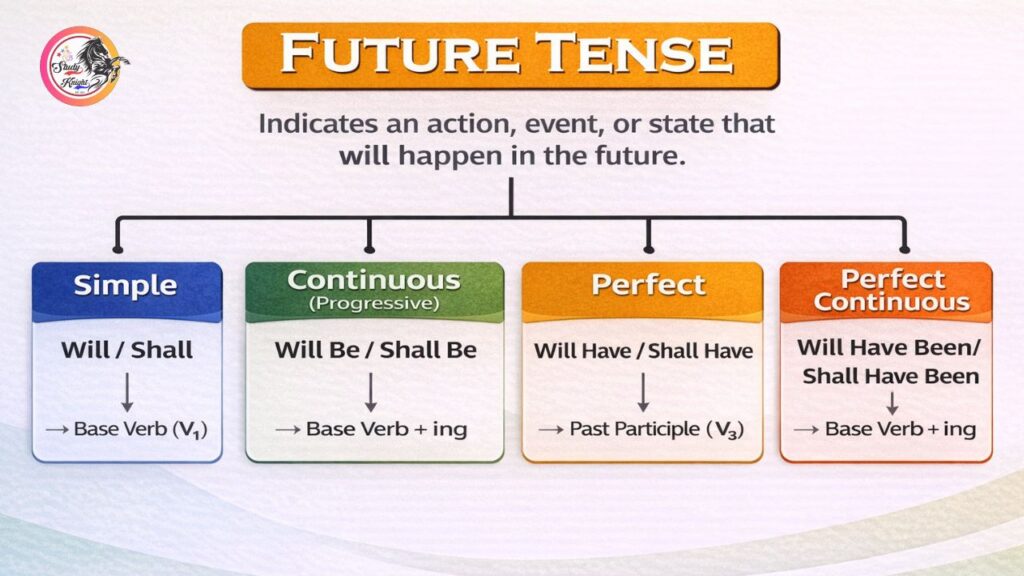
Future tense का उपयोग उन actions या events के लिए किया जाता है जो आने वाले समय में होंगे।
👉 आसान भाषा में:
जो काम अभी नहीं हुआ, लेकिन आगे होगा—उसे future tense में लिखते हैं।
Examples:
- I will visit the market tomorrow.
- She will prepare dinner tonight.
- They will watch a match in the evening.
Types of Future Tense 📌
Future tense के 4 मुख्य प्रकार होते हैं:
- Simple Future Tense (Future Indefinite)
- Future Continuous Tense
- Future Perfect Tense
- Future Perfect Continuous Tense
1. Simple Future Tense (Future Indefinite)
👉 Use:
यह tense उन actions को दर्शाता है जो future में होने वाले हैं।
Structure (बनाने का तरीका) 🧩
👉 Affirmative:
Subject + will/shall + Verb1
👉 Negative:
Subject + will/shall + not + Verb1
👉 Interrogative:
Will/Shall + Subject + Verb1 + ?
Sentence Patterns Table
| Affirmative ✅ | Negative ❌ | Interrogative ❓ |
| I will start a new course tomorrow. | I will not attend the class today. | Will you start the course? |
| They will join the company soon. | They will not accept the offer. | Will they join soon? |
| She will finish her work on time. | She will not complete the task today. | Will she complete it? |
| We will meet in the evening. | We will not organize the event. | Will we meet today? |
| He will purchase a laptop next month. | He will not invest in this plan. | Will he buy a laptop? |
Important Points 💡
- सभी subjects के साथ “will” use होता है (modern English में “shall” कम use होता है)
- Main verb हमेशा base form (V1) में होती है
- यह tense future plans, decisions और predictions के लिए use होता है
2. Future Continuous Tense – Use, Rules & Examples ⏳
What is Future Continuous Tense?
Future Continuous tense उन actions को दर्शाता है जो भविष्य में किसी खास समय पर जारी (ongoing) होंगी।
👉 आसान भाषा में:
जो काम future में किसी समय पर चल रहा होगा, उसे इस tense में लिखते हैं।
Structure (बनाने का तरीका) 🧩
👉 will + be + verb + ing
Examples:
- I will be studying tonight.
- She will be working in the office tomorrow.
- They will be traveling next week.
Sentence Rules 📌
👉 Affirmative:
Subject + will + be + Verb + ing
👉 Negative:
Subject + will + not + be + Verb + ing
👉 Interrogative:
Will + Subject + be + Verb + ing + ?
Sentence Patterns Table
| Affirmative ✅ | Negative ❌ | Interrogative ❓ |
| I will be preparing for the test tomorrow. | I will not be attending the function. | Will you be preparing tomorrow? |
| They will be visiting their relatives soon. | They will not be going out tonight. | Will they be visiting soon? |
| She will be completing her assignment. | She will not be joining the class. | Will she be completing it? |
| We will be discussing the plan later. | We will not be meeting today. | Will we be discussing it later? |
| He will be playing cricket in the evening. | He will not be watching TV. | Will he be playing cricket? |
Important Points 💡
- Structure हमेशा will + be + ing form होता है
- यह tense future में ongoing action को दिखाता है
- सभी subjects के साथ “will” ही use होता है
3. Future Perfect Tense – Use, Rules & Examples ⏳
What is Future Perfect Tense?
Future Perfect tense उन actions को दर्शाता है जो भविष्य में किसी निश्चित समय से पहले पूरे हो चुके होंगे।
👉 आसान भाषा में:
जो काम future में किसी time तक complete हो जाएगा, उसे इस tense में लिखा जाता है।
Structure (बनाने का तरीका) 🧩
👉 will have + Verb3 (third form)
Examples:
- I will have completed my work by evening.
- They will have reached the station before us.
- She will have learned English by next year.
Sentence Rules 📌
👉 Affirmative:
Subject + will have + Verb3
👉 Negative:
Subject + will not have + Verb3
👉 Interrogative:
Will + Subject + have + Verb3 + ?
Sentence Patterns Table
| Affirmative ✅ | Negative ❌ | Interrogative ❓ |
| I will have finished the task by tonight. | I will not have finished the task by tonight. | Will you have finished the task? |
| They will have completed the project soon. | They will not have completed the project. | Will they have completed it? |
| She will have written the report by tomorrow. | She will not have written the report. | Will she have written it? |
| We will have reached home before sunset. | We will not have reached home. | Will we have reached on time? |
| He will have saved enough money by next year. | He will not have saved enough money. | Will he have saved enough money? |
Important Points 💡
- Structure हमेशा will have + V3 होता है
- Main verb हमेशा third form (V3) में होती है
- यह tense future में completed action (before a certain time) को दिखाता है
4. Future Perfect Continuous Tense – Use, Rules & Examples ⏳
What is Future Perfect Continuous Tense?
Future Perfect Continuous tense उन actions को दर्शाता है जो future में किसी निश्चित समय तक लगातार चलते रहेंगे (duration के साथ)।
👉 आसान भाषा में:
जो काम future में किसी समय तक काफी समय से चल रहा होगा, उसे इस tense में लिखा जाता है।
Structure (बनाने का तरीका) 🧩
👉 will have been + verb + ing
Examples:
- By evening, I will have been studying for three hours.
- They will have been working here for five years by next month.
- She will have been practicing dance all day.
Sentence Rules 📌
👉 Affirmative:
Subject + will have been + Verb + ing + for/since + time
👉 Negative:
Subject + will not have been + Verb + ing + for/since + time
👉 Interrogative:
Will + Subject + have been + Verb + ing + for/since + time + ?
Sentence Patterns Table
| Affirmative ✅ | Negative ❌ | Interrogative ❓ |
| Riya will have been waiting for hours by evening. | Riya will not have been waiting for hours. | Will Riya have been waiting for long? |
| I will have been learning for two hours before you come. | I will not have been learning for long. | Will I have been learning for two hours? |
| He will have been sleeping for hours before we arrive. | He will not have been sleeping for long. | Will he have been sleeping before we arrive? |
| The players will have been practicing since morning. | The players will not have been practicing. | Will the players have been practicing since morning? |
| She will have been working all day by night. | She will not have been working all day. | Will she have been working all day? |
Important Points 💡
- Structure हमेशा will have been + ing form होता है
- यह tense duration (for/since) पर focus करता है
- Future में ongoing action + time duration दिखाता है
Frequently Asked Questions (FAQs) on Tense 📘
Q1. What is Tense in Grammar?
👉 Answer:
Tense वह grammatical form है जो यह बताता है कि कोई action, event या state किस समय (past, present, future) में हो रही है। यह sentence में समय का संबंध स्पष्ट करता है ⏳
Q2. How many types of Tenses are there in English?
👉 Answer:
English में कुल 12 tenses होते हैं, जैसे:
- Simple Present, Simple Past, Simple Future
- Present, Past, Future Continuous
- Present, Past, Future Perfect
- Present, Past, Future Perfect Continuous
Q3. Give some examples of Simple Present Tense.
👉 Answer:
- I read books daily.
- She goes to college by bus.
- They live in a small town.
- The sun rises in the east.
- We play cricket on Sundays.
Q4. What are examples of Present Continuous Tense?
👉 Answer:
- I am preparing for my exam.
- She is making dinner right now.
- They are playing in the ground.
- The child is sleeping quietly.
- We are watching a show together.
Q5. Give an example of Past Perfect Tense.
👉 Answer:
- She had completed her work before the meeting began.
Sentence Patterns Table
| Affirmative ✅ | Negative ❌ | Interrogative ❓ |
| Riya will have been waiting for hours by evening. | Riya will not have been waiting for hours. | Will Riya have been waiting for long? |
| I will have been learning for two hours before you come. | I will not have been learning for long. | Will I have been learning for two hours? |
| He will have been sleeping for hours before we arrive. | He will not have been sleeping for long. | Will he have been sleeping before we arrive? |
| The players will have been practicing since morning. | The players will not have been practicing. | Will the players have been practicing since morning? |
| She will have been working all day by night. | She will not have been working all day. | Will she have been working all day? |
Important Points 💡
- Structure हमेशा will have been + ing form होता है
- यह tense duration (for/since) पर focus करता है
- Future में ongoing action + time duration दिखाता है
Frequently Asked Questions (FAQs) on Tense 📘
Q1. What is Tense in Grammar?
👉 Answer:
Tense वह grammatical form है जो यह बताता है कि कोई action, event या state किस समय (past, present, future) में हो रही है। यह sentence में समय का संबंध स्पष्ट करता है ⏳
Q2. How many types of Tenses are there in English?
👉 Answer:
English में कुल 12 tenses होते हैं, जैसे:
- Simple Present, Simple Past, Simple Future
- Present, Past, Future Continuous
- Present, Past, Future Perfect
- Present, Past, Future Perfect Continuous
Q3. Give some examples of Simple Present Tense.
👉 Answer:
- I read books daily.
- She goes to college by bus.
- They live in a small town.
- The sun rises in the east.
- We play cricket on Sundays.
Q4. What are examples of Present Continuous Tense?
👉 Answer:
- I am preparing for my exam.
- She is making dinner right now.
- They are playing in the ground.
- The child is sleeping quietly.
- We are watching a show together.
Q5. Give an example of Past Perfect Tense.
👉 Answer:
- She had completed her work before the meeting began.